

Gasping for Breath with COPD

COPD - Chronic Obstructive Pulmonary Disease

Chronic Pain

Artist Statement
Narrative Art is told through myths, symbols and stories. This type of art tells a story or depicts a journey, enticing the viewer to enter these colorful tapestries.
This series focuses on four spheres of global health concerns: Depression, Malaria, Chronic Lung Disease and Chronic Pain.
Four Global Health Concerns
first shown at the National Institutes of Health, Bethesda, Maryland
Malaria




COPD
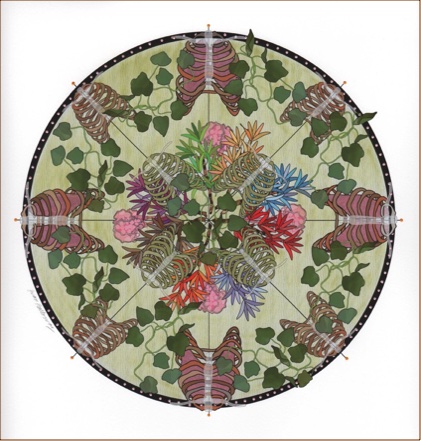
Chronic Obstructive Pulmonary Diseases is an umbrella term describing progressive lung disease. These include emphysema, chronic bronchitis, nonreversible asthma. Symptoms usually indicate a more developed stage of lung disease.
Rib Cage
The partially closed bony structure that protects the heart and lungs. There are 12 paired bones, symmetrical on the right and left side.
Lung
The primary organ of respiration. There are normally two lungs, a right and a left, near the backbone on either side of the heart. The right lung is larger and weighs more than the left. The lungs are enclosed with the pleural sac.
Palm Leaf
Rebirth.
Ivy
Wisdom. Steadiness. Need for protection. Eternal Friendship. Fidelity.
Alveoli
Clusters of air sacs that comprise most of the lung tissue. It assists the exchange of oxygen and carbon dioxide that takes place in the air sacs. When the lung is diseased, less air is passed into the blood stream and breathing is difficult.
Lady Palm Tree
This tree is grown in gardens and used indoors in homes and offices. It adapts easily to most interiors. The Lady Palm can handle both humid and dry climates. This plant targets ammonia and cleans out other indoor pollutants, helping to purify the air.
Palm Leaf
Rebirth.
English Ivy
Described as an effervescent plant and a good fix for allergies. It is said to clean a room of airborne mold in just 6 hours. It also filters formaldehyde found in some household cleaning products. Ivy wraps itself around the object it is near.
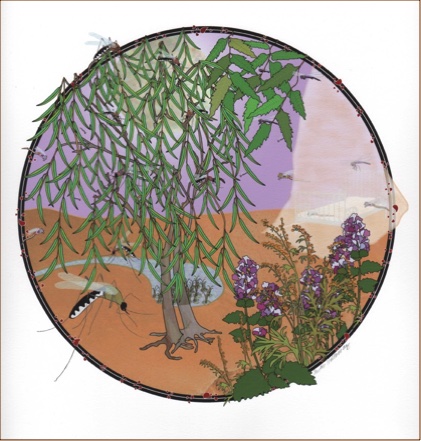
Battling Malaria
Malaria
A blood disease caused by a parasite that is carried by female mosquitoes. It is life-threatening. Once bitten, the parasite invades the host liver and multiplies, infecting and destroying the red blood cells.
Mosquito
Malaria is transmitted by the female mosquito. The female takes the blood meal from a bite and uses the proteins of the blood to carry out egg production. During a bite, saliva from an infected mosquito carrying the malaria parasite is transmitted to the bitten person.
Eucalyptus Tree
The eucalyptus tree grows to approximately 80 feet tall, needing full sunlight. It has blue green foliage. The tree has a sweet aroma which naturally repels mosquitoes.
Catnip
A perennial plant, catnip oil is an effective mosquito repellent. It also repels other bugs and insects, but attracts butterflies. Attractive to most cats.
Standing Water
Mosquitoes lay their eggs in standing water.
Blood (border)
The female mosquito needs blood to carry out her egg production.
Dragonfly
Speed. Whirlwind of activity. Rebirth. Swiftness. Considered a messenger. The dragonfly is a predator of mosquitoes at all stages of life. Dragonfly larvae feed on mosquito larvae, while adult dragonflies eat adult mosquitoes. They are guards in the battle against the spread of malaria.
Bed Netting
The most effective means of preventing mosquito bites while sleeping is a bed net. The typical mosquito bite occurs between 9p.m. and 5a.m. Each net lasts between 3-4 years. Insecticide-treated bed nets have been shown to reduce malaria deaths of children under the age of 5.
Neem Tree Leaves
The tree is a fast growing evergreen tree that grows best in tropical regions. In India, the neem tree is known as the “village pharmacy”. Neem oil is a natural mosquito repellent. Sometimes the oil is used with kerosene lamps or citronella flares.
Sweet Wormwood
Sweet wormwood is a perennial plant with greenish silver foliage. It has a pungent odor that keeps mosquitoes at a distance. Crush leaves of the wormwood plant form a smudge that is an effective mosquito repellent.
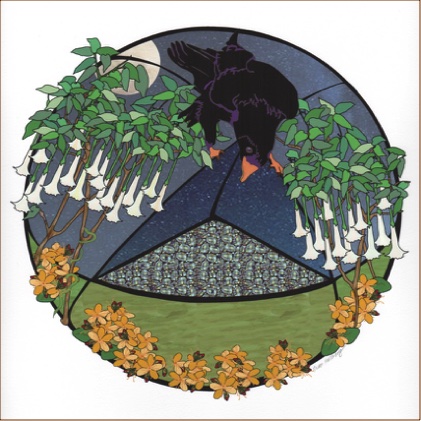
Looking Inside
Depression
A mood disorder that affects the body, mind and ability to carry out normal everyday activities. It can be a feeling of aloneness, isolation, anger, and feeling trapped in one’s surroundings. Symptoms include trouble sleeping, apathy, difficulty concentrating, and lack low energy.
St. John’s Wort
A little shrub with small yellow flowers with a bushy center stamens. It is an herbaceous perennial with a long history of herbal use. Clinical trials report modest improvement of depression and nervousness. It is a medicinal herb with antidepressant and anti-inflammatory properties. The name comes from its traditional flowering and harvesting on St. John’s day, the 24th of June. It is found in dry areas, fields, and pastures in sunny locations.
Raven
Wanderer. Ravens have the ability to recognize old friends. A companion of the sun. It is thought that the raven is the only bird to understand the interpretations of signs and omens. The raven is a harbinger of change, and has hidden potential. A raven has acute discrimination and instinctiveness.
Star Filled Sky
Divine guidance. The inability to achieve all your goals in one sweep, which means doing a lot of hard work to reach the next stage.
Angel’s Trumpets or Datura
A woody tree with pendulous flowers. All parts of the plant are potentially poisonous, with the seeds and leaves being especially toxic. Ingestion can cause paralysis, confusion, hallucinations, and death. It is a semi-woody shrub or small tree with many branches and a single trunk. It is very fragrant.
The angel trumpet plant was originally only used by shamans to gain entrance to other worlds of existence. Some native American Indians believe that a dream helper can only come from a person who has drunk from a potion, made from the angel trumpet plant.
The name Datura is taken from the Hindu meaning, white thorn apple. Reports of severe mental anguish from ingesting this plant have been recorded.
Mosaic Pattern
A design made up of small pieces of colored glass or stone.
Full Moon
The full moon represents emotions and feelings. It is the eye of the night. Strength. Power.
Serpent
Earth healer. The serpent’s ability to shed skin makes it a symbol of transformation and self renewal.
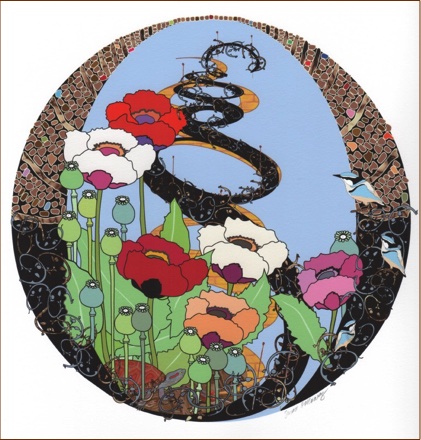
Managing Chronic Pain
Stone Arch
A passage from one state to another. To be reborn.
Leaf
Happiness. Fertility. Growth. Renewal.
Yellow Brick Road
Functions as a guideline under the painful brambles. First appears in L. Frank Baum’s classic children’s book, The Wonderful Wizard of Oz (1900).
Ruby Slippers
Magic shoes worn by Dorothy Gale in the 1939 film The Wizard of Oz (see yellow brick road). In the film, the slippers were a gift from the good witch Gilda and used to get Dorothy back home to Kansas.
Willow Bark
Substance extracted from the bark is known for producing salicylic acid, the active ingredient in aspirin. The bark is used to provide pain relief for a variety of alignments and conditions. Helps to reduce fever.
Acupuncture Needles
Used in traditional Chinese and alternative medicine therapies, thin needles are inserted at specific points on the body for pain relief.
Nuthatch
The Native American bird of medicine and healing. Shows courage, ingenuity, and resourcefulness. It has the ability to move in many directions.
Poppy
The Chinese view the poppy as a sign of rest. Beauty.
Fruitfulness. Healing balm. Eases extreme pain.
Opium: A substance derived from poppy seeds, used to produce morphine, a pain killing narcotic.
(flower colors)
Red: Passion. The sleep of death.
Red-Violet: Endurance and inner
strength. Bravery.
White: A new reality. Purity and
light
Pink: Sensuality.
Golden Orange: Cleansed body
Thorns
Suffering. Pain. Hardship. Thorns continually cause pain or problems.
Turtle
Long life. A symbol of immortality and wisdom. Stability. Strength. Longevity.
Bramble
A prickly painful shrub.
©Susan Holloway
©Susan Holloway
©Susan Holloway
©Susan Holloway
Depression - Looking Inside
susanhollowayart@gmail.com [651 497 1263]
Copyright © Susan Holloway. All rights reserved
www.susan-hollloway.com
susanhollowayart@gmail.com [651 497 1263]
Copyright © Susan Holloway. All rights reserved
www.susan-hollloway.com
[ available as limited edition gicleé ]